
The arrival of summer and the high temperatures we reach in Elche and the surrounding area during these months pose a danger to pets . Our dogs and cats have less tolerance for heat than we do, since they don't have sweat glands ; in other words, they don't sweat.
Dogs can only eliminate heat when they pant , expelling sweat through the pads of their paws (although it is a slow process) or through areas with little hair , such as the abdomen, in short-haired dogs.
Some animals are more prone to heatstroke , such as puppies or elderly dogs, those with respiratory or heart disease, overweight, brachycephalic breeds (pugs, bulldogs, boxers...), dark-skinned dogs (because their fur attracts more heat), and dogs that have eaten, exercised, or are very nervous just before or during sun exposure.
SYMPTOMS OF HEAT STROKE
We speak of heatstroke when our animal cannot regulate its body temperature efficiently , and it rises to 42ºC (the average body temperature of a dog is 38-39ºC), and we can observe the following symptoms:
- Rapid and labored breathing.
- Difficulty and heaviness of movement.
- The animal's swaying and wobbling.
- Excessive salivation.
- Bluish color on the tongue and mucous membranes
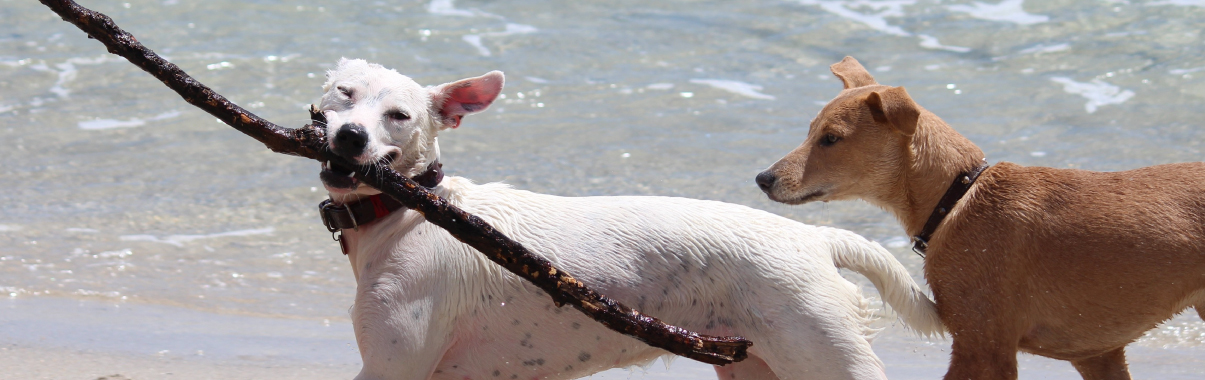
The greatest risk of our dog suffering from heatstroke is when we're at the beach or hiking without any shade in sight, where there's high humidity combined with high temperatures. But we should also be careful in paved areas, such as parkways or riverbanks, as concrete retains a great deal of heat.
Of course, at this time of year it is strictly forbidden to leave the animal in the car , not even with the windows down, not even for 5 minutes!
If you still observe symptoms of heatstroke in your dog, you should act quickly (but calmly) and do the following:
- Lower their body temperature gradually (never suddenly!) by continuously wetting them with lukewarm water. Do not cover them with towels or submerge them.
- Try giving him fresh water to drink , little by little, in small intervals, so that he regains his hydration.
- Once he has recovered more, quickly go to your veterinarian so they can check the animal's overall condition and prescribe a treatment to accelerate his recovery.
We hope you find these tips useful; prevention is better than cure!